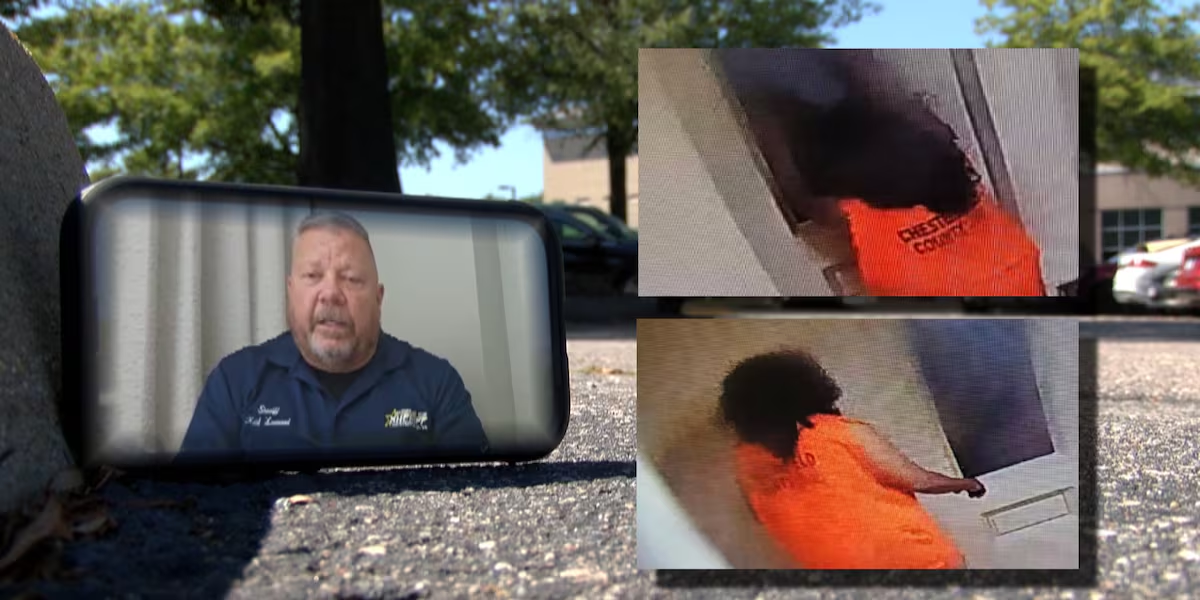
Chesterfield Sheriff Karl Leonard is sounding an alarm over a systemic collapse in mental health care, arguing that local jails have effectively become the default psychiatric wards for a society that stopped investing in its hospitals decades ago. The sheriff traces the current crisis back forty years to the widespread closure of mental institutions across the United States, leaving law enforcement officers to manage medical emergencies they aren’t equipped to handle. According to Leonard, the result is a dangerous trend where those suffering from severe psychological distress are criminalized rather than treated.
The urgency of the issue hit home recently when a woman in a mental health crisis spent several days confined in the Chesterfield County Jail while waiting for an available bed at Central State Hospital. Despite having a temporary detention order meant to secure her immediate care, she remained stuck on a waiting list for seventy two hours. By the time she could potentially have been admitted, her legal window for mandatory treatment had expired, forcing her release without receiving any professional help. For Sheriff Leonard, returning a vulnerable person to their family under these circumstances represents a total failure of the national healthcare infrastructure.
State officials acknowledge that the system is stretched to its breaking point. A spokesperson for the Virginia Department of Behavioral Health and Developmental Services noted that state hospitals are currently operating slightly over full capacity. Much of this congestion is attributed to a high volume of forensic patients who must be prioritized by law, which severely limits space for civil admissions and often forces patients to travel long distances for inpatient care. While the department claims it is working with community services boards to expand the behavioral health workforce and reduce bottlenecks, those solutions may not arrive fast enough for those currently in crisis.
For Sheriff Leonard, incremental adjustments are not sufficient given the stakes involved. He insists that true progress requires an aggressive expansion of bed space in specialized medical facilities where staff are properly trained and resourced to provide clinical intervention. Until then, he warns that police departments will continue to bear the burden of a public health catastrophe, treating symptoms behind bars because there is nowhere else for patients to go.