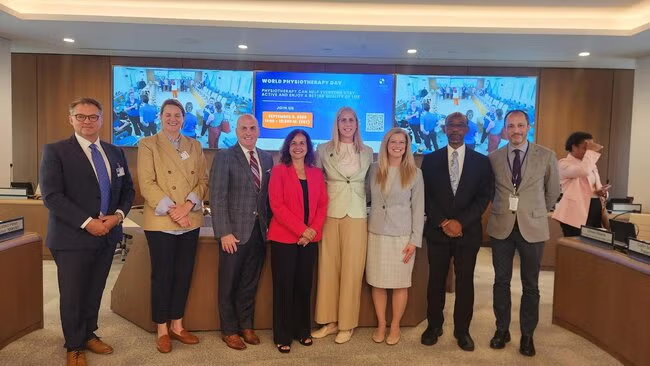
In a series of events marking World Physiotherapy Day, the Pan American Health Organization reaffirmed that rehabilitation is far more than a luxury or a niche medical specialty. Speaking from Washington, D.C., officials stressed that these services are fundamental to maintaining independence and overall health across every stage of life. Dr. Hennis, a department director at PAHO, emphasized that rehabilitation should be viewed as an essential health service that empowers individuals to remain active members of their communities and pursue their personal goals without unnecessary physical barriers.
To highlight these connections, PAHO organized a hybrid webinar titled The Impact of Rehabilitation on the Functioning of the Population. This discussion brought together experts from World Physiotherapy and the American Physical Therapy Association to explore how integrating rehab into primary healthcare is vital for achieving universal health coverage. The speakers shifted the focus toward patient experience, using personal stories to demonstrate how timely and high-quality care directly translates into greater autonomy and better social participation for patients.
Beyond the theoretical discussions, the organization brought the principles of physiotherapy into practice with interactive wellness stations at its headquarters. Staff members worked alongside registered physiotherapists to learn about ergonomics, balance, and strength training. These hands-on sessions were designed to show how small changes in daily office routines can significantly improve long-term movement and comfort in the workplace.
Ultimately, the day served as a broader call to action for governments across the Americas to prioritize rehabilitation within their national health budgets. PAHO argued that true health equity cannot be achieved unless these interventions are planned, financed, and delivered as core components of any modern health system. By investing in both technology and the 전문 workforce, countries can reduce avoidable disabilities and ensure that quality care is available to everyone regardless of their income level or location.