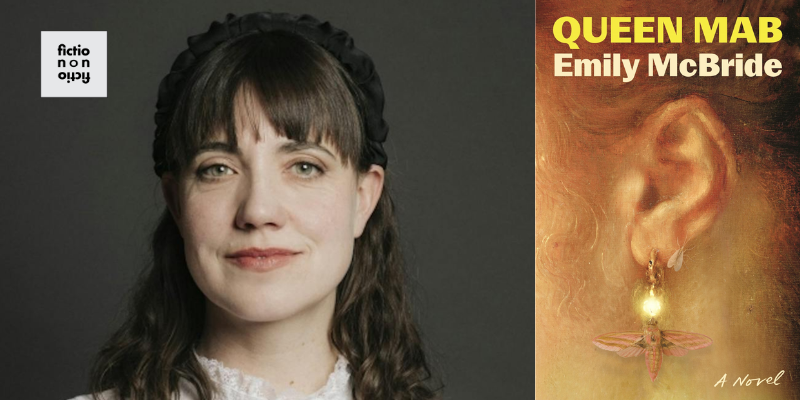
Fiction writer Emily McBride recently joined hosts V.V. Ganeshananthan and Whitney Terrell on the Fiction/Non/Fiction podcast to explore the harrowing intersections of maternal mental health, folklore, and modern tragedy. During the conversation, McBride addressed the intense media scrutiny surrounding the trial of Lindsay Clancy, a Massachusetts woman accused of killing her three children. By examining Clancy’s insanity defense, McBride noted how the case has captured the public imagination and sparked critical, overdue conversations regarding the devastating effects of postpartum psychosis.
These themes serve as the foundation for McBride’s debut novel, Queen Mab, which follows a twenty-three-year-old graduate student struggling to bond with her newborn. The protagonist descends into a state where she fears her child is actually a changeling, a supernatural entity substituted for her own baby. McBride explained that she utilized specific narrative shifts to mirror the character’s fluctuating grip on reality, drawing on Victorian and modernist literature to illustrate how a fracturing mind seeks patterns to explain its suffering.
The discussion delved deeply into why ancient myths ofchangelings and fairies remain relevant today. McBride suggested that while modern society relies on medical science to diagnose postnatal depression and psychosis, historical folklore provided early explanations for those experiencing dissociation or a lack of immediate maternal bonding. She argued that these old stories offered a narrative framework for women who felt alienated from their roles as mothers long before clinical psychology existed.
Beyond the internal struggle of her lead character, McBride explored the complex dynamics of familial expectation through the lens of adoption and generational pressure. Through the character of Carol, a grandmother who desperately wanted biological children, McBride highlights the tension between idealized versions of parenthood and the grueling reality of psychiatric crisis. Ultimately, McBride views literature as an essential tool for understanding these hidden depths of motherhood, bridging the gap between scientific diagnosis and the lived emotional experience.