Millions of Americans struggle with sleep apnea without even realizing it, often dismissing chronic fatigue and heavy snoring as simple signs of aging or stress. However, these symptoms can signal a dangerous condition where the muscles in the throat relax enough to block the airway, leading to interrupted breathing throughout the night. Left untreated, obstructive sleep apnea significantly increases the risk of serious health complications, including stroke, cardiovascular disease, and high blood pressure.
For many patients, the standard first line of defense is a CPAP machine, but the bulky masks and hoses can be claustrophobic and disruptive to sleep. Jody DeLavern, a lifelong cyclist, found herself fighting extreme exhaustion despite her fitness level. After discovering she was gasping for air during her sleep, she attempted to use a CPAP machine multiple times but simply could not tolerate it. Her search for an alternative led her to Henry Ford Health and Dr. Andrea Plawecki, an otolaryngologist specializing in sleep medicine.
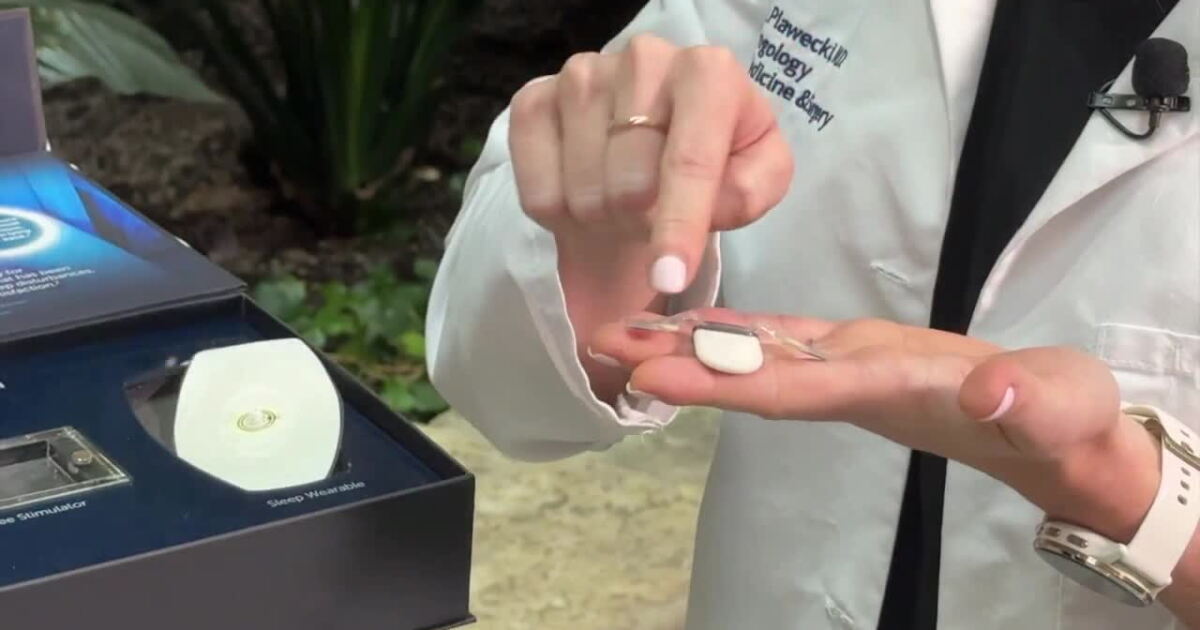
To help patients like DeLavern, Henry Ford Health has introduced a newer surgical option known as Genio. This FDA-approved implant is inserted via a small incision under the chin and works by delivering gentle electrical pulses to the nerves controlling the tongue and throat muscles. By stimulating these muscles, the device prevents the airway from collapsing during sleep, ensuring a steady flow of oxygen without the need for cumbersome external machinery strapped to the face.
One of the most significant advantages of Genio compared to other implants is its power source. Rather than placing a battery inside the body that would eventually require another surgery to replace, Genio uses an external battery attached to a disposable adhesive patch worn under the chin each night. This design allows physicians to easily adjust stimulation levels externally as a patient’s needs evolve over time.
While not every patient is a candidate, those with moderate to severe sleep apnea who cannot tolerate traditional therapy may find relief through this technology. For DeLavern, who spent months recovering from her procedure before activating the device, the hope is that clearer nights will lead back to active days on her bike and an end to what she described as epic snoring.